About the Quiz
A three part quiz to measure your civic identity.
Civic values are the beliefs that people hold about what makes for a good society, a good government, and how individuals and groups should interact. These values shape how people think about public policy, American culture, and the appropriate use of power in a democracy.
People differ in which values they care most about. For example, some people focus more on individual rights and responsibilities (Individualism), while others emphasize their role as members of a collective (Community). Some people emphasize the need to move society forward (Change), while others want to make sure that we preserve the things we care about (Tradition).
We see civic values as complimentary – that is, they all have something valuable to contribute to public life (as well as one’s own life), and none is sufficient by itself. Some values, like Democratic Governance, require the careful balance of enduring civic tensions.
Civic engagement refers to the actions and behaviors people take to make a positive contribution to society. These actions can take many forms, from voting, following the news, or volunteering, to protesting or donating to causes.
Our research shows that people tend to prefer certain types of civic engagement over others. The Civic Profile highlights three main engagement styles: Institutional Actors, Community Builders, and Change Advocates. Each style is described below.
These categories overlap; many people participate in multiple forms of civic engagement, and some activities – like petitioning and canvassing – can fit into multiple categories. In fact, our data suggests that the more someone engages in one style, the more likely they are to engage in others. A person’s civic engagement type can also change over time. While our research, as well as frameworks developed by others*, reveal general tendencies, there is no perfect typology or catalog of civic behaviors.
Institutional Actors
Institutional Actors engage primarily through formal political and governance systems. They participate by voting, staying informed on public affairs, supporting political campaigns, tracking policies, contacting elected officials, and trying to influence decisions through established democratic channels. Institutional Actors value working within existing institutions–such as government bodies or political parties–and tend to believe that lasting change is achieved through laws, elections, and official processes.
While Indigenous peoples developed diverse and effective systems of governance long before the United States existed, the delegates to the Continental Congress are an early example of Institutional Actors working within a formal national political system.
Engaging through institutions is essential for democracy, but some challenges also require complementary approaches, such as community organizing, public awareness campaigns, or external advocacy, to expand the impact of institutional efforts.

Are you an Institutional Actor? Reflect on these questions:
Motivations
- What motivates you to engage through formal political and governance systems?
- Which political issues or institutional processes feel most important for you to influence, and why?
Impact
- What kinds of outcomes do you seek through institutional participation—policy change, representation, stability, or accountability?
- Which government processes—like elections, legislation, or regulations—do you think have the greatest impact, and which can the average person influence most effectively?
Alternatives & Balance
- When do you see the limits of working within existing institutions?
- How might direct community action, public awareness efforts, or external pressure complement your institutional engagement?
- How do you decide when to stay inside the system and when to support change efforts outside it?
Community Builders
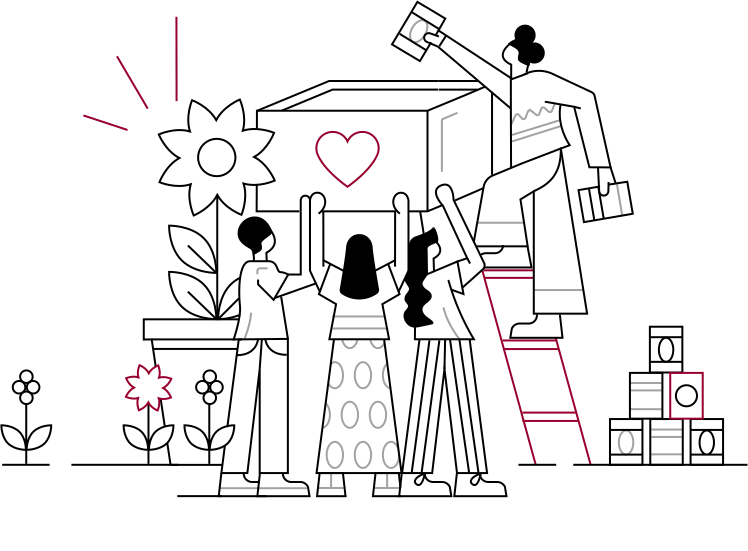
Community Builders focus on strengthening communities through direct, relationship-based action. They volunteer, join neighborhood associations, support local nonprofits, attend community meetings, and pursue careers that serve the public good. Community Builders invest time and care in people and places they know, seeking tangible ways to make a difference close to home. Volunteers for Philadelphia’s Union Fire Company, which was co-founded by Benjamin Franklin in 1736, are early examples of Community Builders in America.
Community Builders often see the impact of their efforts firsthand. At the same time, their efforts can be difficult to scale and may not fully address systemic challenges. Some social problems require complementary strategies—such as public policy reform or broader public awareness campaigns—to amplify and sustain direct community action.
Are you a Community Builder? Reflect on these questions:
Motivations
- What draws you to hands-on, relationship-based community work, and which communities or causes feel most meaningful to you?
- How do you decide where to focus your time, energy, and resources among competing needs?
Impact
- Who – organizations, policymakers, funders, or networks — could help amplify or sustain the impact of your community-based efforts?
- What kinds of partnerships have the greatest potential to extend your reach?
Alternatives & Balance
- How might you balance direct community action with other approaches to addressing social challenges?
- In what ways could your community work connect to advocacy, public awareness, or institutional change?
- What role do you want to play when direct action alone is not sufficient?
Change Advocates
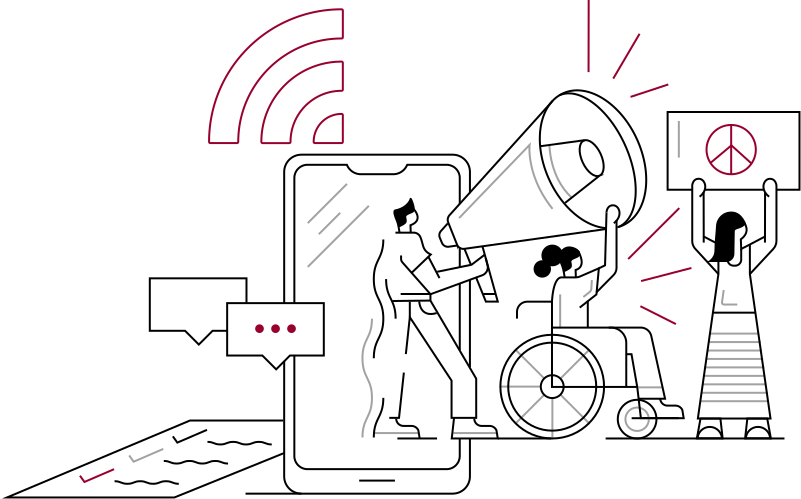
Change Advocates focus on mobilizing people and building awareness to educate, inspire, and pressure individuals or institutions toward change. They use strategies such as petitions, canvassing, protests, boycotts or buycotts, fundraising, and public expression – often online – to influence outcomes from outside traditional systems of governance. Change Advocates are highly attuned to large-scale social problems and seek to shift public opinion, norms, and priorities by amplifying issues and demanding action.
Unlike Institutional Actors, Change Advocates primarily operate outside formal political systems and may engage in civil disobedience when existing institutions seem unresponsive. Early examples include the signers of the Declaration of Independence and the authors of the Federalist Papers.
Change Advocates play a critical role in raising awareness and creating momentum for reform. At the same time, lasting systemic change often requires complementary approaches – such as working within governance institutions or engaging in direct community action – to translate pressure and visibility into durable outcomes.
Are you a Change Advocate? Reflect on these questions:
Motivations
- Which issues most motivate you to mobilize others or speak out publicly, and what personal or moral commitments drive that choice?
- Under what conditions do you feel compelled to act outside traditional political or institutional channels?
Impact
- What kinds of change are you ultimately seeking—shifts in awareness, accountability, policy, or culture—and how do you define success?
- Which strategies have you found most effective for building awareness and motivating sustained action?
Alternatives & Balance
- Beyond protest and public dissent, what other approaches might advance the causes you care about?
- How do you decide when to prioritize activism versus other forms of engagement, such as community service or pursuing institutional change?
Civic knowledge is an understanding of how our political system is structured; the rights and responsibilities of citizens; and key events, movements, and figures from our history. Civic knowledge is essential for a healthy democracy.
Given how important civic knowledge is, immigrants seeking to become naturalized citizens are required to take the US Citizenship and Immigration Services (USCIS) Naturalization Civics Test. To pass, applicants must correctly answer 60 percent of questions on a test covering the American government, constitutional principles, national holidays, and key symbols (such as the flag and the Statue of Liberty).
Based on recent surveys, two-thirds of the American population would not be able to pass the Naturalization Civics Test. Although 95 percent of Americans say that civic knowledge is important, national surveys consistently show that civic knowledge is suffering: one in three Americans cannot identify three branches of government, and only 37 percent know the name of their congressional representative.
If you want to strengthen your civic knowledge, many resources are available online. The official USCIS civics question bank and nonpartisan platforms (including many of our institutional partners) offer tools to test and build your understanding; and reputable national and local news outlets help you stay informed about important issues and current events.
Reflect on these questions:
Which civic topics or competencies do you believe are essential for all Americans to understand?
Who should be responsible for strengthening civic knowledge—schools, families, media institutions, government, or individuals?
Can someone participate effectively in civic life without strong factual knowledge? Under what conditions?
How would you assess your current level of civic knowledge? In what areas are you strongest, and where do you see gaps?
What is your assessment of the USCIS Naturalization Civics Test? Does it capture the knowledge citizens need today? What, if anything, would you add or take away?


